

Be Prepared for a Wetter, Stormier Winter
When severe weather arrives, flooding can happen remarkably quickly. Heavy rainfall, overflowing rivers, saturated or compacted ground and drainage systems struggling to cope can all combine to leave roads, commercial premises, yards and other areas under water.
With the Met Office warning that the developing 2026 El Niño could increase the likelihood of wetter and stormier conditions across the UK during late autumn and early winter, it is worth being prepared before a flooding emergency occurs.
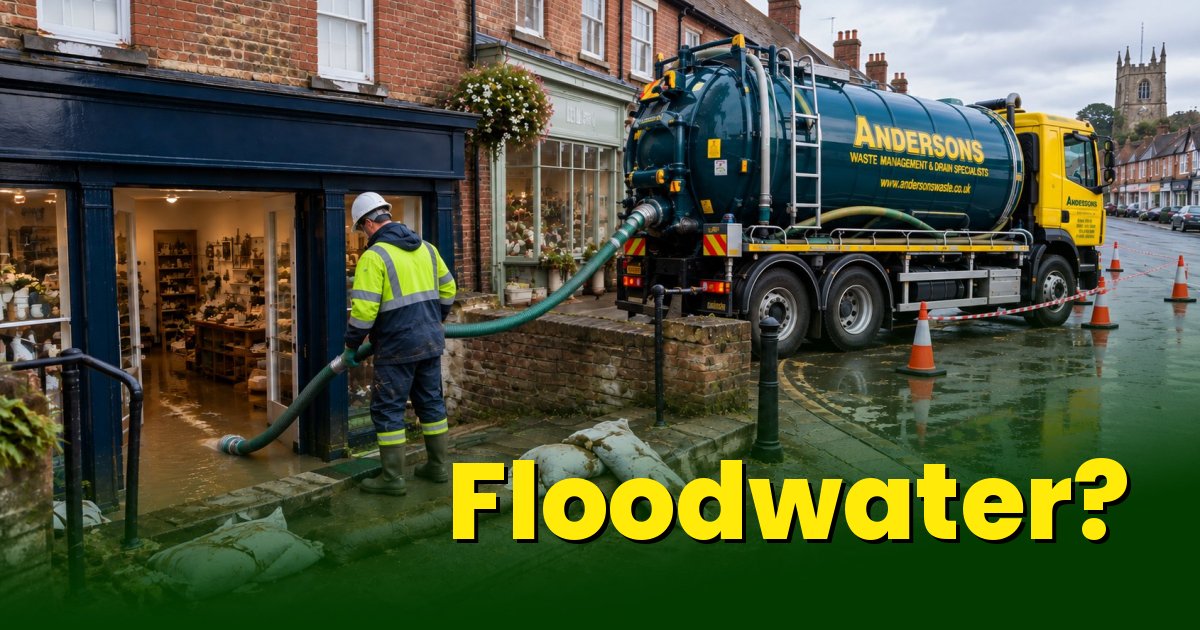
At Andersons, our Emergency Floodwater Response Service provides rapid assistance when large volumes of water need to be removed. Our experienced team works with businesses, water companies and local authorities to help manage floodwater and reduce the disruption it can cause.
For emergency assistance, call our 24/7 emergency number on 01454 222 888.
Preparing for increased flood risk this winter
The UK weather is influenced by many different factors, so El Niño does not mean that flooding will inevitably occur. However, the Met Office is currently forecasting an increased likelihood of wetter and stormier conditions in the UK and north-west Europe during autumn and early winter as the 2026 El Niño develops.
That makes preparation particularly important for organisations responsible for commercial premises, infrastructure, roads, drainage systems and other assets where flooding could quickly cause disruption.
The risk is not simply about how much rain falls. It is also about what happens to that water once it reaches the ground.
Following the exceptionally hot and dry conditions experienced across the UK during summer 2026, the transition to much wetter weather could create challenging conditions. The Met Office has reported that prolonged heat has significantly dried soils, while official Government guidance warns that intense rainfall after prolonged dry weather can result in water flowing rapidly over dry, hard and compacted ground, contributing to flash flooding.
This means that an early-season period of heavy rainfall could produce substantial surface run-off before the ground and drainage systems have had time to adjust to sustained wet conditions.
Flood risk in England: Surface water is a major concern
The scale of England’s flood risk highlights just how quickly heavy rainfall can become a serious problem, particularly in built-up areas where drainage systems can be overwhelmed. The figures below from the Environment Agency show the significant number of properties already at risk from surface water, rivers and the sea.
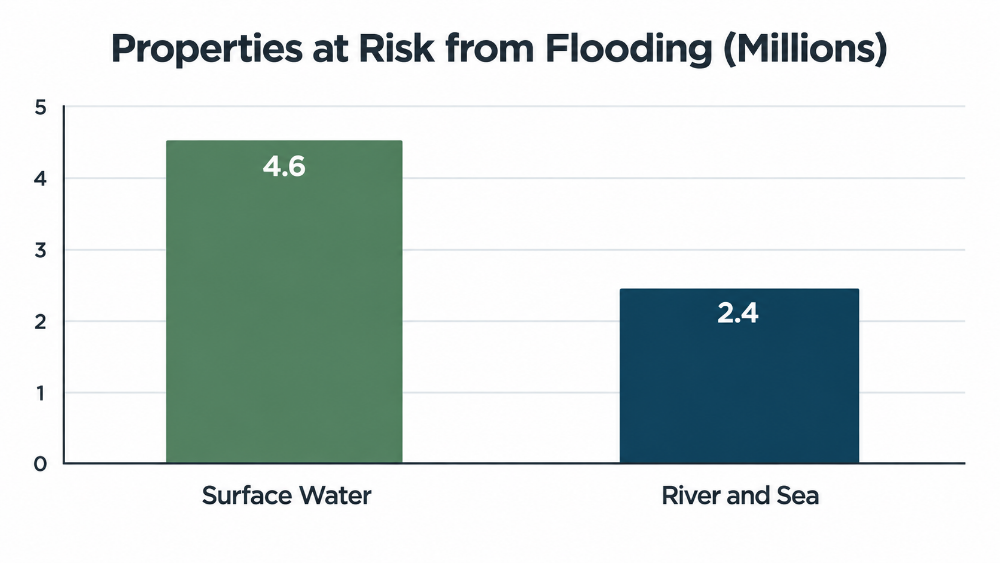
Source: Environment Agency, National Flood Risk Assessment, 2024/25.
Why can flooding happen so quickly?
There are several different ways floodwater can develop, and major incidents can involve more than one source at the same time.
Surface water flooding
Surface water flooding occurs when rainfall cannot drain away quickly enough through normal drainage systems or soak into the ground. Instead, water collects on or flows across the surface.
This can be particularly problematic in built-up areas, where roads, car parks, roofs and other hard surfaces create large volumes of rapid run-off. The Environment Agency estimates that more than 4.6 million properties in England are in areas at risk from surface water flooding.
During an intense storm, the sheer volume of water can simply exceed the capacity of local drains, gullies, sewers and other drainage infrastructure.
River and watercourse flooding
Heavy or prolonged rainfall can cause rivers and other watercourses to rise rapidly. When water levels exceed the capacity of the channel, rivers can overtop their banks and flood surrounding areas.
The risk can be particularly serious when intense rainfall occurs across a whole catchment, sending large volumes of water downstream. High river levels can also prevent surface water from draining away effectively, meaning different sources of flooding can compound one another.
Burst or overtopped riverbanks can therefore create significant volumes of floodwater in a relatively short period.
Groundwater flooding
Flooding does not always come from rainfall flowing across the surface. Groundwater flooding occurs when the water table rises to ground level, allowing water to emerge through the ground or into lower-lying areas such as basements and underground spaces.
After prolonged periods of rainfall, groundwater flooding can persist for days, weeks or even months.
However, this may be a later issue as the exceptionally dry summer this year will have lowered the ground water levels, so this will take time to raise the levels.
Sewer and drainage flooding
Sewer systems can also become overwhelmed during periods of exceptionally heavy rainfall. Blockages, restricted capacity and the sheer volume of water entering the network can all contribute to flooding.
In an urban environment, this can create a particularly difficult situation where surface water, drainage and sewer flooding occur together.
The challenge for built-up areas
Urban and built-up areas can be especially vulnerable when extreme rainfall arrives.
Large areas of concrete, tarmac, paving and other impermeable surfaces mean that rainwater cannot simply soak into the ground. Instead, it can run rapidly towards drains and low points.
When rainfall exceeds the capacity of the drainage network, water has to go somewhere. It may collect in roads, car parks, yards, loading areas and around buildings, potentially disrupting access and business operations.
Government flood-risk guidance recognises that surface water flooding can occur when the volume and intensity of rainfall overwhelms local drainage systems. It can happen well away from rivers, meaning that a business does not need to be located beside a watercourse to experience serious flooding.
For emergency assistance, call our 24/7 emergency number on 01454 222 888.
The impact of a sudden flood
Floodwater can quickly become much more than an inconvenience.
For businesses, flooding can affect access routes, car parks, warehouses, production areas, plant rooms, storage areas and other operational spaces. Water can also carry silt, debris and contaminants, creating additional clean-up and waste-management requirements.
The health risks associated with floodwater should also be taken seriously. Government health guidance highlights the potential for floodwater to contain contaminants, sewage, human waste and animal waste, depending on the source of the flooding.
The sooner excess water can be safely removed, the sooner the affected area can begin the process of recovery.
Emergency Floodwater Removal Service from Andersons
At Andersons, we understand that flooding does not happen conveniently during normal working hours.
Our Emergency Floodwater Removal Service is available 24 hours a day, seven days a week, providing a rapid response when significant volumes of water need to be pumped and removed.
Our experienced team has extensive knowledge of liquid waste removal, drainage and tanker operations. Andersons operates a modern fleet, including large 6,000-gallon articulated vacuum tankers alongside smaller tankers suitable for areas where access is more restricted.
This means we can respond to a wide range of situations and select equipment appropriate to the circumstances and access available.
Our service can be particularly valuable when flooding has created large volumes of standing water that need to be removed quickly and responsibly.
Supporting businesses, water companies and local authorities
Flood emergencies often require several organisations to work together. Andersons can support individual businesses, water companies and local authorities when additional drainage and floodwater removal capacity is required.
For businesses, this can mean rapid assistance with floodwater affecting operational areas, yards, access points or other commercial premises.
For water companies and local authorities, our tanker and liquid waste capabilities can provide additional operational support during incidents where existing resources are under significant pressure.
The Environment Agency recognises that managing surface water flood risk involves partnership working between lead local flood authorities, water and sewerage companies and other organisations.
Andersons is well placed to provide practical support when additional pumping and water removal capacity is needed.
Experienced floodwater response when you need it
Flooding is stressful enough without having to spend valuable time trying to find someone who can respond.
At Andersons, we combine experienced people, modern tanker equipment and established liquid waste management capabilities to provide a professional emergency response.
Our Bristol-based operation serves a wide area across the South West and surrounding regions, with established coverage including Bristol, Swindon, Cardiff, Newport, Bath, Gloucester, Cheltenham and surrounding areas.
Whether floodwater has followed extreme rainfall, surface water run-off, an overflowing watercourse or another incident, our team can assess the situation and help determine the most appropriate response.
Don't wait until the water rises
The exact impact of this winter's weather cannot be predicted with certainty. El Niño is one of several factors influencing UK weather, and the Met Office will continue to update its forecasts as the season approaches.
What can be predicted is that periods of exceptionally heavy rainfall can place significant pressure on drainage systems, particularly when large volumes of water arrive in a short period.
With the Met Office currently highlighting the increased likelihood of wetter and stormier conditions during late autumn and early winter, now is a sensible time for businesses, organisations and infrastructure operators to consider how they would respond if flooding occurred.
If floodwater is already causing a problem, however, preparation is no longer the priority: a rapid response is.
Need emergency floodwater removal?
Andersons provides a 24/7 Emergency Floodwater Response Service for businesses, water companies and local authorities.
If you need an Emergency Floodwater Removal Service, our experienced team is ready to respond.
Call Andersons 24 hours a day on 01454 222 888.
When floodwater needs to be removed quickly, having an experienced team you can call can make all the difference.