

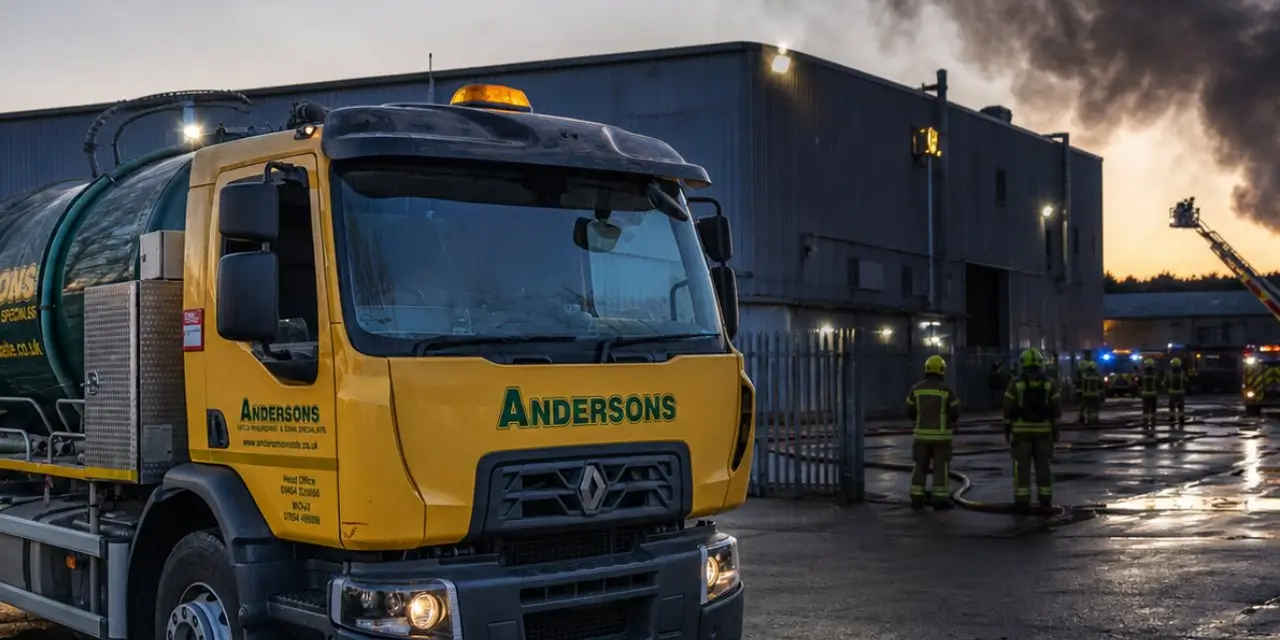
Professional Fire Water Runoff Removal & Drainage to Protect Your Site and the Environment
When a fire has been extinguished, the emergency response does not end once the flames are out. Large volumes of contaminated fire water, firefighting foam and hazardous liquids can remain on site, creating a significant environmental risk if they are not managed correctly.
At Andersons Waste Management, we provide a professional Fire Water Drainage & Contaminated Liquid Removal Service for sites across the South West and surrounding areas.
Working alongside fire and rescue services, site managers, insurers and environmental consultants, we safely remove contaminated liquids before they have the opportunity to enter surface water drains, watercourses, groundwater or the wider environment.
Our experienced team is available to respond quickly, helping businesses minimise environmental damage, remain compliant with environmental legislation and begin the recovery process as soon as it is safe to do so.
Why Fire Water Needs Specialist Removal
The water used to extinguish a fire is rarely just water by the time the incident has finished.
As it flows across the site, it can become contaminated with a wide range of hazardous substances including:
- Ash and soot
- Oils and fuels
- Chemicals
- Heavy metals
- Building materials
- Firefighting foam
- Burnt plastics and other hazardous residues
- Contaminated silt and sediment
If these pollutants are allowed to enter surface water drains, rivers, streams or groundwater, they can cause significant environmental damage and may lead to regulatory action.
Professional removal and disposal is therefore essential to protect both the environment and your business.
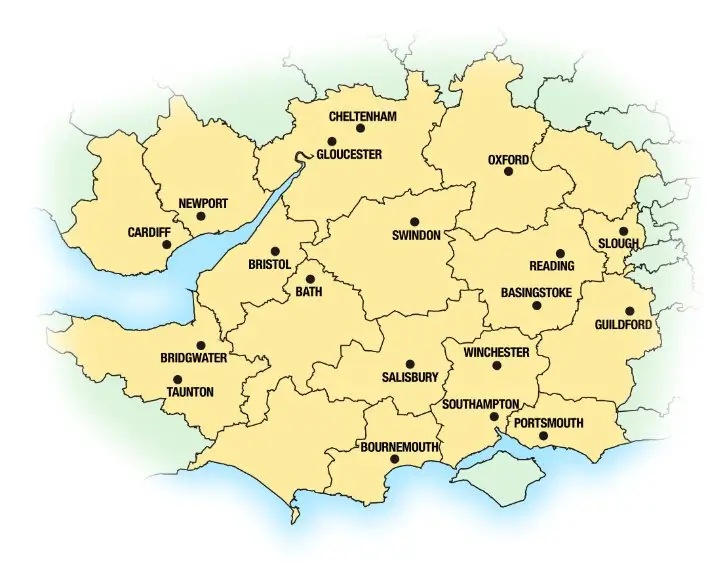
Local South West coverage
- Bristol Fire Water Removal
- Swindon Fire Water Removal
- Cardiff & Newport Fire Water Removal
- Bath Fire Water Removal Contractor
Book Fire Water Removal Services
For Fire Water Removal services in Bristol, Swindon, Bath, Cardiff, Newport, Gloucester and Cheltenham areas, complete the form below or call 01454 222 888.
What Our Fire Water Removal Services Includes
Our Fire Water Drainage Service
Our specialist tankering vehicles and experienced operators safely collect contaminated fire water from a wide variety of locations, including:
- Containment lagoons
- Bunded areas
- Car parks
- Service yards
- Basements
- Drainage systems
- Interceptor systems
- Temporary storage tanks
- Flooded buildings
- Low-lying areas where contaminated liquids have collected
Once collected, the waste is transported by licensed waste carriers to appropriately authorised treatment or disposal facilities.
Every stage of the process is carried out safely and in accordance with current environmental legislation and waste management requirements.
Supporting Compliance with Environment Agency Guidance
The Environment Agency places significant importance on preventing contaminated liquids from entering the environment.
Businesses have a responsibility to prevent pollution wherever reasonably possible, including ensuring contaminated liquids are contained, collected and disposed of appropriately.
Current Environment Agency guidance advises that contaminated water should be collected in sealed systems, treated on site where appropriate or removed by a registered waste carrier.
It also makes clear that contaminated liquids must not be allowed to enter surface water drainage systems, which often discharge directly into natural watercourses. In some situations, environmental permits may also be required for activities involving contaminated discharges.
Using our specialist fire water removal service helps demonstrate that appropriate steps have been taken to protect the environment while ensuring waste is transported and managed responsibly.
Helping Prevent Environmental Pollution
One of the biggest risks following a fire is contaminated runoff entering the drainage network.
Many surface water drains discharge directly into nearby rivers, streams, lakes and natural watercourses without treatment. Even relatively small amounts of contaminated fire water can have a serious impact on aquatic wildlife and local ecosystems.
Our rapid response service helps reduce this risk by removing contaminated liquids before they can leave the site, supporting businesses in protecting the local environment while reducing the likelihood of costly clean-up operations.
Working Alongside Emergency Services and Recovery Teams
Following a fire, multiple contractors are often involved in returning the site to normal operation. Our team regularly works alongside:
- Fires and Rescue Services
- Loss adjusters
- Insurance companies
- Environmental consultants
- Restoration contractors
- Site facilities managers
- Principal contractors
By responding quickly and coordinating with other recovery specialists, we help keep recovery work moving safely and efficiently.
Helping Prevent Environmental Pollution
One of the biggest risks following a fire is contaminated runoff entering the drainage network.
Many surface water drains discharge directly into nearby rivers, streams, lakes and natural watercourses without treatment. Even relatively small amounts of contaminated fire water can have a serious impact on aquatic wildlife and local ecosystems.
Our rapid response service helps reduce this risk by removing contaminated liquids before they can leave the site, supporting businesses in protecting the local environment while reducing the likelihood of costly clean-up operations.
Why Choose Andersons?
When responding to fire incidents, experience matters. Our customers choose Andersons because we offer:
- Rapid emergency response
- Modern vacuum tanker fleet
- Fully licensed waste carrier
- Safe collection of contaminated liquids
- Environmentally responsible disposal
- Experienced and professional operators
- Support for commercial and industrial sites
- Reliable service throughout the Southwest and surrounding regions
We understand that every fire incident is different, and we work with you to provide a practical solution that protects both your site and the environment.
Frequently Asked Questions
- What is fire water?
Fire water is the water used by firefighters to extinguish a fire. During the incident it often becomes contaminated with hazardous materials, ash, chemicals, oils and debris from the affected building or equipment. - Why can't contaminated fire water simply go down the drain?
Surface water drains usually discharge directly into rivers, streams and other natural watercourses without treatment. Allowing contaminated fire water to enter these drains can cause serious pollution and environmental harm. The Environment Agency advises that contaminated liquids should be contained and managed appropriately. - Is contaminated fire water classified as waste?
Yes. Once firefighting water has become contaminated, it is generally treated as controlled waste and must be collected, transported and disposed of using appropriate licensed waste management procedures.
- Can Andersons respond to emergency incidents?
Yes. We understand that fire incidents require a rapid response. Our experienced team can attend sites to remove contaminated liquids quickly, helping to reduce environmental risks and support the recovery process. - Where is the contaminated liquid taken?
Collected waste is transported by our licensed waste carriers to appropriately authorised treatment or disposal facilities, where it is managed in accordance with environmental legislation.