

What’s Right for Your Property or Business?
At Andersons Waste Management, we’re often asked about the difference between cesspits and sceptic tanks. While they’re both used for off-mains drainage solutions, the way they work, their maintenance needs, and the legal requirements around them are quite different.
Whether you're planning an installation or simply need ongoing Cesspit or Septic Tank services, our expert team is here to help property owners and businesses across the South West, including Bristol, Cardiff, Gloucester and Swindon, make the right decision and keep their systems running smoothly.
Cesspit or Sceptic Tank: What's the Difference?
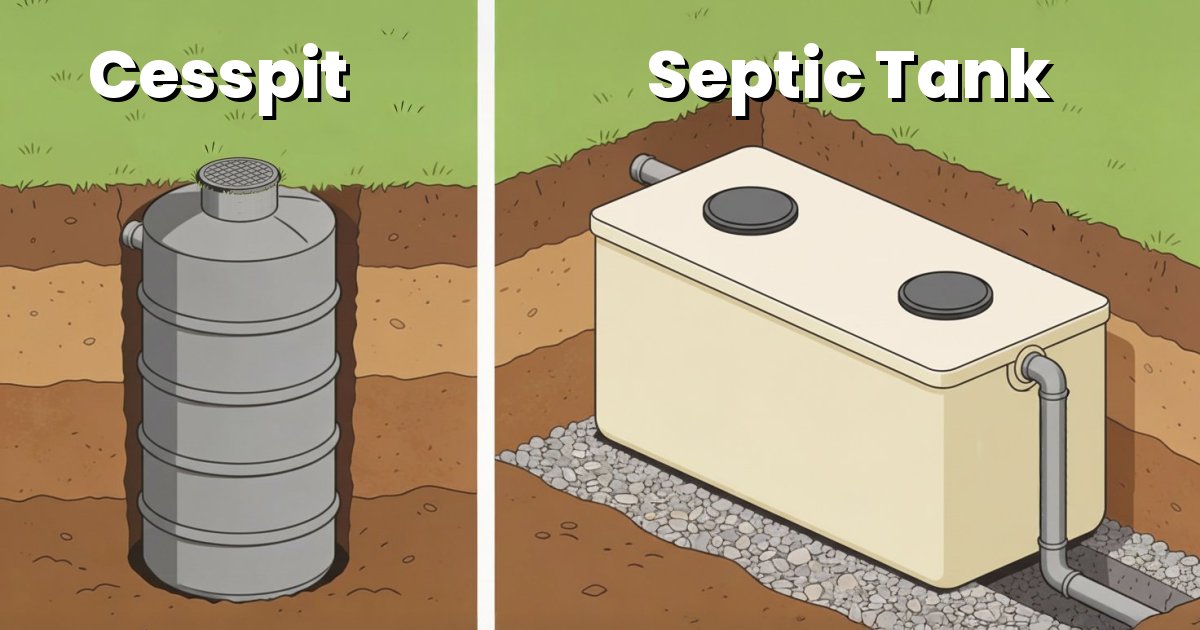
Although the terms are sometimes used interchangeably, a cesspit and a sceptic tank operate in completely different ways. A cesspit is a sealed underground tank that simply collects and stores wastewater and sewage. There’s no treatment process involved, everything that goes in stays there until it’s emptied.
On the other hand, a sceptic tank is a form of rudimentary wastewater treatment system. It separates solids from liquids, allowing the liquid effluent to be discharged into a drainage field where it can percolate safely into the ground, while the solids remain in the tank and are broken down by natural bacterial processes.
Legal Requirements and Compliance in the South West
The legal framework surrounding off-mains drainage systems is important to understand. Cesspits are highly regulated due to their environmental impact. Because they don’t treat waste, they must be regularly emptied by a licensed waste carrier to avoid overflows, which can result in serious pollution offences.
Current UK regulations require cesspits to be completely sealed and watertight and to be emptied as often as necessary to prevent any leakage, sometimes this can mean every few weeks, depending on usage.
Sceptic tanks, by contrast, are governed by what’s known as the General Binding Rules. If your sceptic tank discharges into the ground via a drainage field and not directly into a watercourse, it may be exempt from needing a permit, provided it meets certain conditions.
However, since 2020, older systems that discharge into a ditch, stream or river must have been replaced or upgraded to a compliant system. Whether you’re in Bristol, Gloucester, Cardiff or Swindon, our knowledgeable team at Andersons can help you ensure your system meets all the necessary requirements.
Which System is Right for You?
Choosing between a cesspit and a sceptic tank depends on several factors, including the location of the property, the type of soil, space available for installation, and whether the site has any environmental constraints. A cesspit may be appropriate for properties where ground conditions do not allow for a drainage field or where the discharge of treated effluent is not legally permissible. This can include areas with heavy clay soil or locations near water sources.
A sceptic tank is usually the preferred option for rural homes or businesses with suitable ground conditions and enough land to install a drainage field. It provides a more environmentally sustainable solution and can be more cost-effective over the long term, given the reduced frequency of emptying.
At Andersons Waste Management, we can provide a consultation service to help you assess which solution is best for your needs. We take into account site surveys, local regulations, and future maintenance considerations to guide you towards the most appropriate and compliant system.
Cesspit or Septic Tank Installation Process
Installing a cesspit or sceptic tank is a specialist task that requires careful planning and compliance with local authority regulations. For both systems, we begin with a comprehensive site assessment to determine ground suitability, tank capacity requirements, and access for ongoing emptying and maintenance.
Once the system type is selected, our team handles every aspect of the installation from excavation and groundwork to fitting and commissioning. Cesspit installations involve placing a sealed tank below ground level, with pipework connected to the property's waste outlets. The tank must be robust, well-ventilated, and located where it can be accessed easily for regular emptying.
Sceptic tank installations are a little more complex, as they include not only the tank itself but also the construction of a drainage field or soakaway system. Engineers will ensure that the discharge from the tank meets environmental standards, and that the entire system is installed to function efficiently and safely.
Ongoing Emptying and Maintenance Services Across the South West
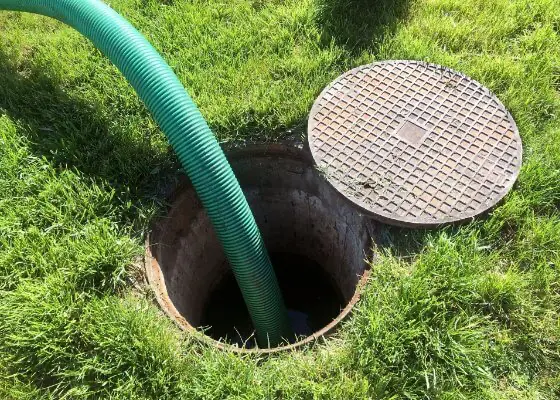
Whichever system you choose, regular emptying and maintenance are crucial to keep it working properly. At Andersons, we offer reliable cesspit services and sceptic tank services tailored to both residential and commercial clients in Bristol, Cardiff, Gloucester, Swindon and surrounding areas across the South West.
Cesspits need to be emptied far more frequently than sceptic tanks, sometimes every 4 to 6 weeks depending on household or business size. Our fleet of modern vacuum tankers is equipped to handle even the most demanding emptying schedules, and we offer convenient, pre-arranged visits to help you avoid emergency callouts.
Sceptic tanks, by contrast, typically need emptying once a year. During this process, our team removes the accumulated sludge from the tank while also checking for signs of wear, blockages, or damage to ensure the system continues to function effectively. We can also offer routine maintenance services, including inspections of the drainage field and advice on keeping your system in optimal condition.
View our Septic Tank & Cesspit Emptying & Maintenance services.
What Are the Benefits of Each System?
Cesspits are straightforward and require no drainage field, making them ideal for challenging sites where treated discharge isn’t feasible. Their sealed design also prevents any risk of groundwater contamination, provided they are properly maintained. However, they are generally more expensive to operate due to the high frequency of emptying required.
Sceptic tanks, while requiring more installation space and a suitable ground profile, offer lower running costs and a more environmentally friendly option. When correctly installed and maintained, they can function effectively for many years with minimal environmental impact.
Supporting You Every Step of the Way
At Andersons Waste Management, we pride ourselves on delivering dependable cesspit services and sceptic tank services throughout the South West. Whether you need expert advice on installation, scheduled emptying, or urgent maintenance, our warm and knowledgeable team is just a phone call away.
With extensive experience supporting homes and businesses across Bristol, Cardiff, Gloucester and Swindon, you can count on us to provide cost-effective, compliant, and environmentally responsible solutions every time.